

Rugberry Journal

Why Handmade Rugs Have Small Irregularities
A handmade rug is never machine straight. Here is how to tell expected variation from a real fault, and how to check a new rug fairly when it arrives.
Read more
Every knotted, handloom and flatweave rug is built on warp and weft, the same frame of threads as any handwoven cloth. Here is how it works under the pile.
Read more
Which Rug Fibres Are Easiest to Clean
Wool, jute, silk and flatweaves behave very differently with a spilt cup of coffee. Here they are ranked for cleaning at home in a busy household.
Read more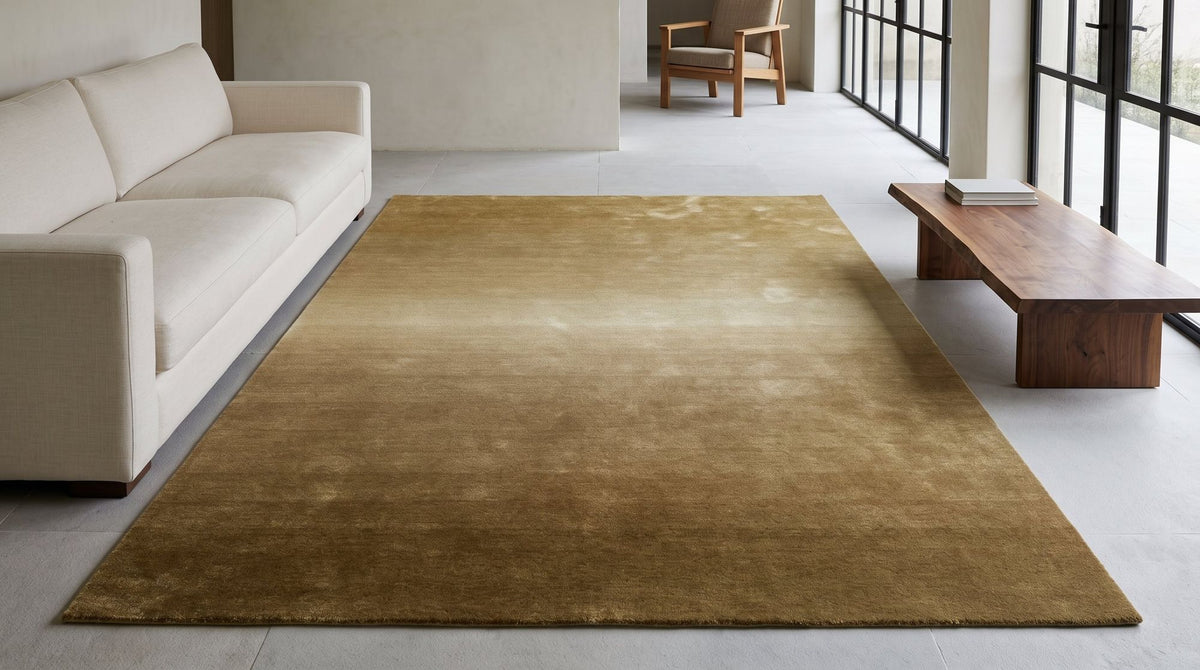
How Wool Takes Colour: Dyeing Explained
Wool yarn is dyed in batches, and no two batches are quite identical. Here is how yarn dyeing works, what a dye lot is and how to plan rugs that must match.
Read more
What Is Jute: The Plant Fibre Behind the Rug
Jute is one of the world's most familiar plant fibres, from sacks and rope to rugs. Here is how the plant becomes a rug, and how it behaves on your floor.
Read more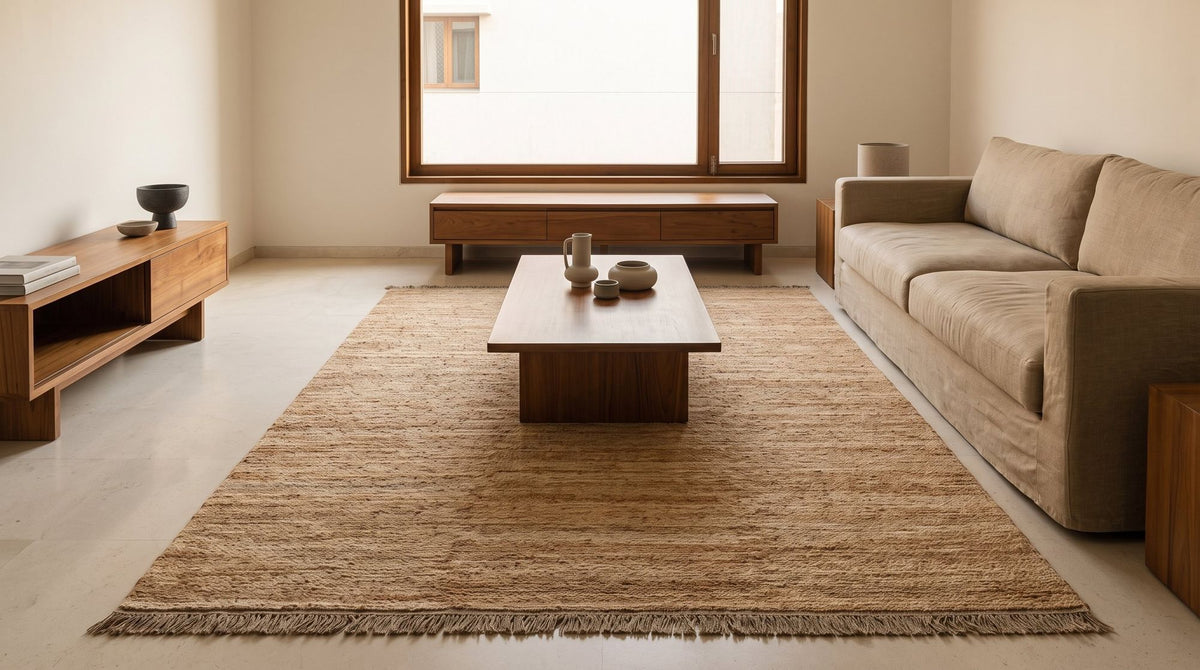
Do Jute Rugs Shed: What to Expect
Jute rugs do shed, as short brittle fibre and a fine dust rather than soft fluff. Here is what to expect on a floor that is swept every day, and how to reduce it.
Read more
Why New Wool Rugs Shed and When It Settles
Fluff from a new wool rug is loose fibre left over from spinning, not the rug coming apart. Here is why it happens, what to expect and how to handle it.
Read more
Alpaca Rugs: How the Fibre Compares to Wool
Alpaca is soft, warm and almost free of grease. Here is how it compares with wool and cashmere on a floor, and where it suits a home in the Gulf.
Read more
Mohair in Rugs: Lustre, Resilience and Rarity
Mohair is one of the most lustrous animal fibres, and one of the rarest in rugs. Here is what it brings to a floor, and how to order it.
Read more
Merino Wool in Rugs: What It Is and How It Feels
You may know merino from a soft sweater. On a floor, a fine wool behaves differently. Here is what merino is and when it makes sense in a rug.
Read more