Article: Mid-Century Modern Homes: Choosing a Rug That Suits the Architecture
Mid-Century Modern Homes: Choosing a Rug That Suits the Architecture
A mid-century modern rug is not a style of rug. It is a rug that understands the architecture around it. Los Angeles holds one of the largest stocks of mid-century housing anywhere, from the Case Study houses to whole neighbourhoods of post-and-beam builds in the hills and the valleys. These houses have strong opinions. Low rooflines, exposed structure, long horizontal sightlines, glass where other houses have walls. Choose a rug the way the architects chose everything else, for the building first, and the room settles. This guide covers proportion, texture and colour, in that order, because that is the order in which these houses notice.
Start with the architecture, not the sofa
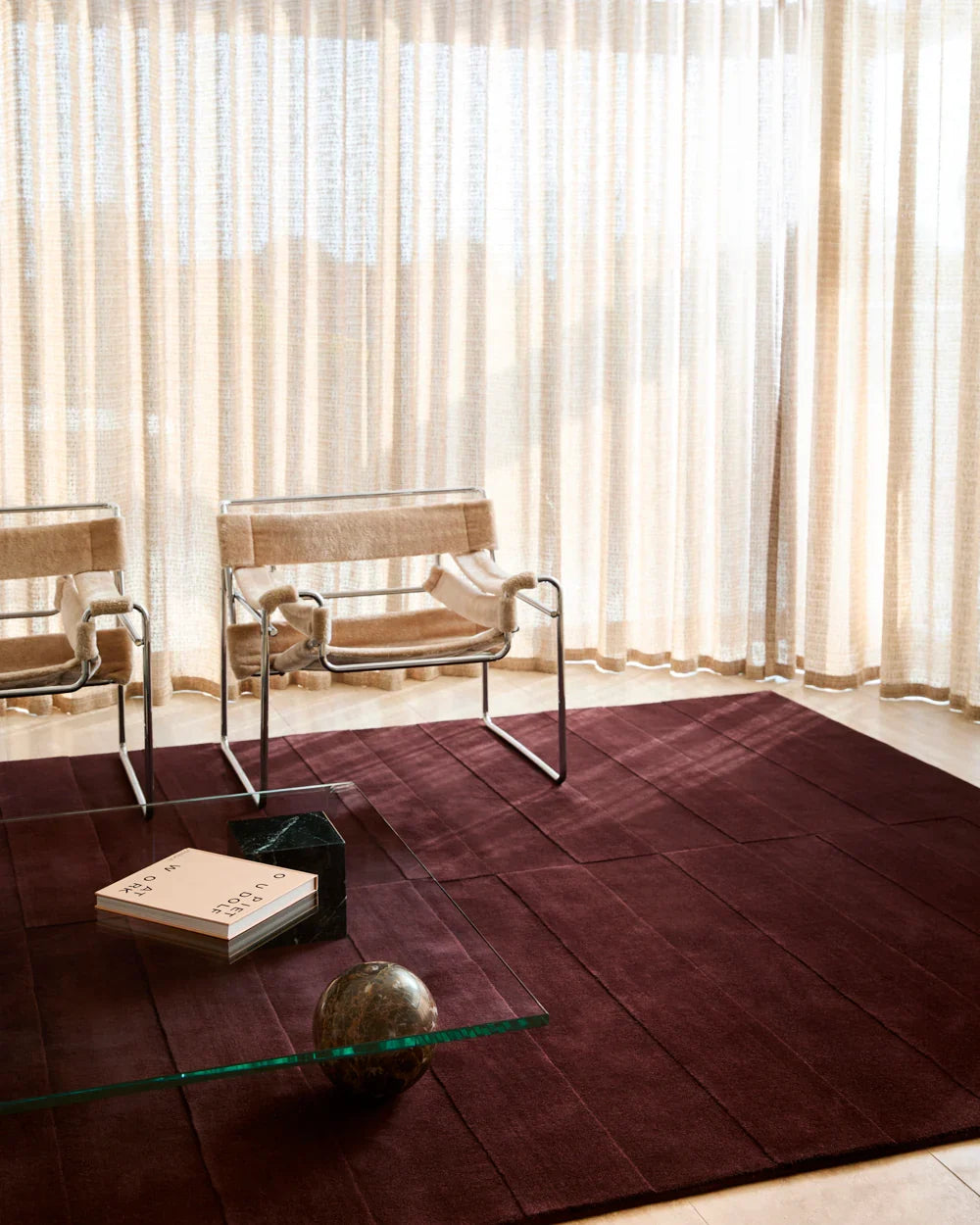
Mid-century houses are horizontal. The eye runs along the beam line, the clerestory, the long low elevation of the built-in seating. A rug supports that reading when it is generous in plan and quiet in profile. Small rugs floating in a large room break the horizontal line into fragments, which is why an undersized area rug looks worse in a post-and-beam living room than it would in a conventional one. Err large. Let the rug hold the whole furniture group, front legs on at minimum, and let it read as a plane, not an island.
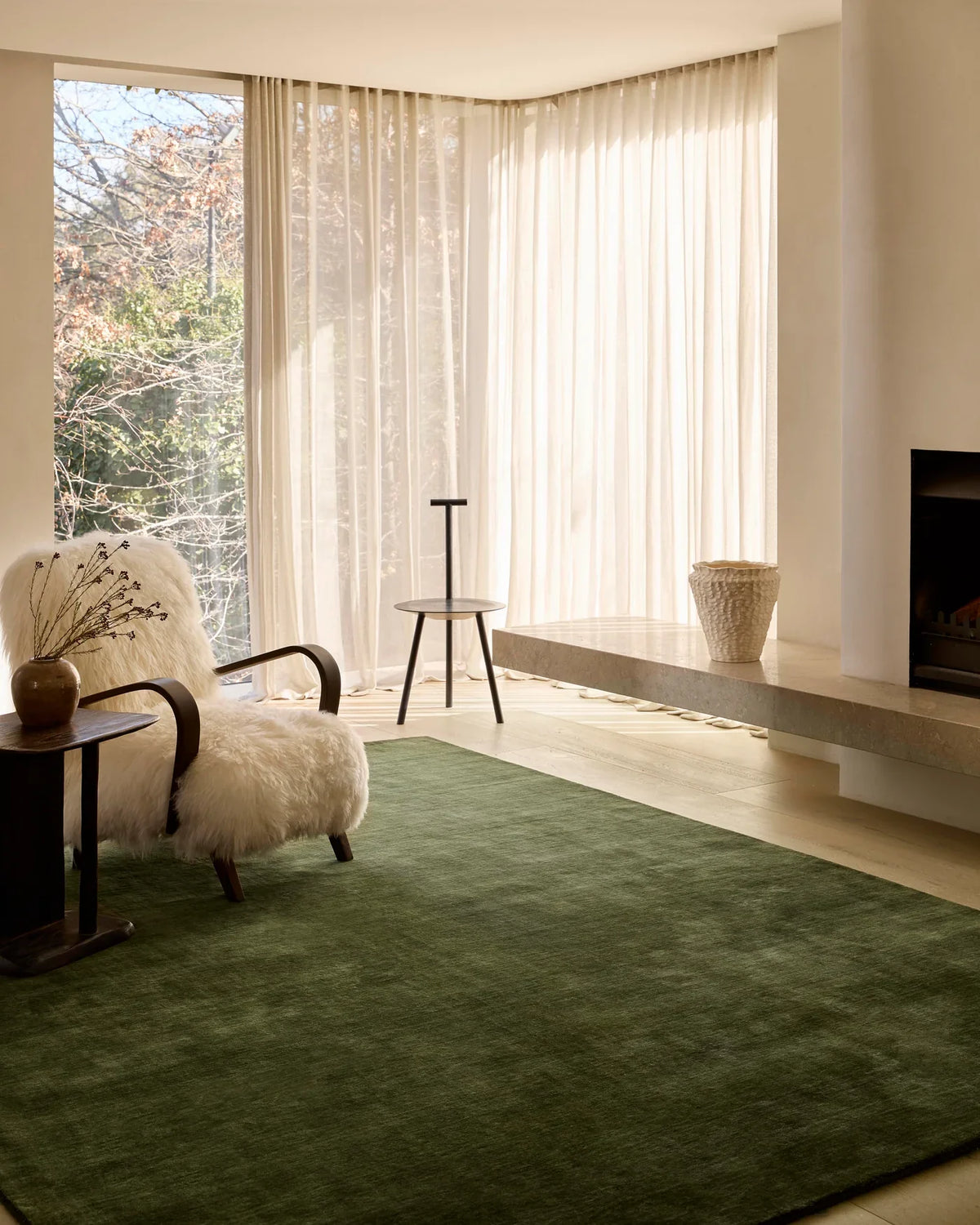
Pile height matters for the same reason. These interiors keep everything low, the seating, the tables, the storage. A low, dense pile keeps the floor plane calm and lets the furniture sit into the room rather than on top of it. Deep shag belongs to a later, looser reading of the period. The houses themselves ask for restraint. If the room needs softness underfoot, get it from density and fibre rather than height, a dense wool pile feels generous without rising above the line the room sets.
Texture over pattern
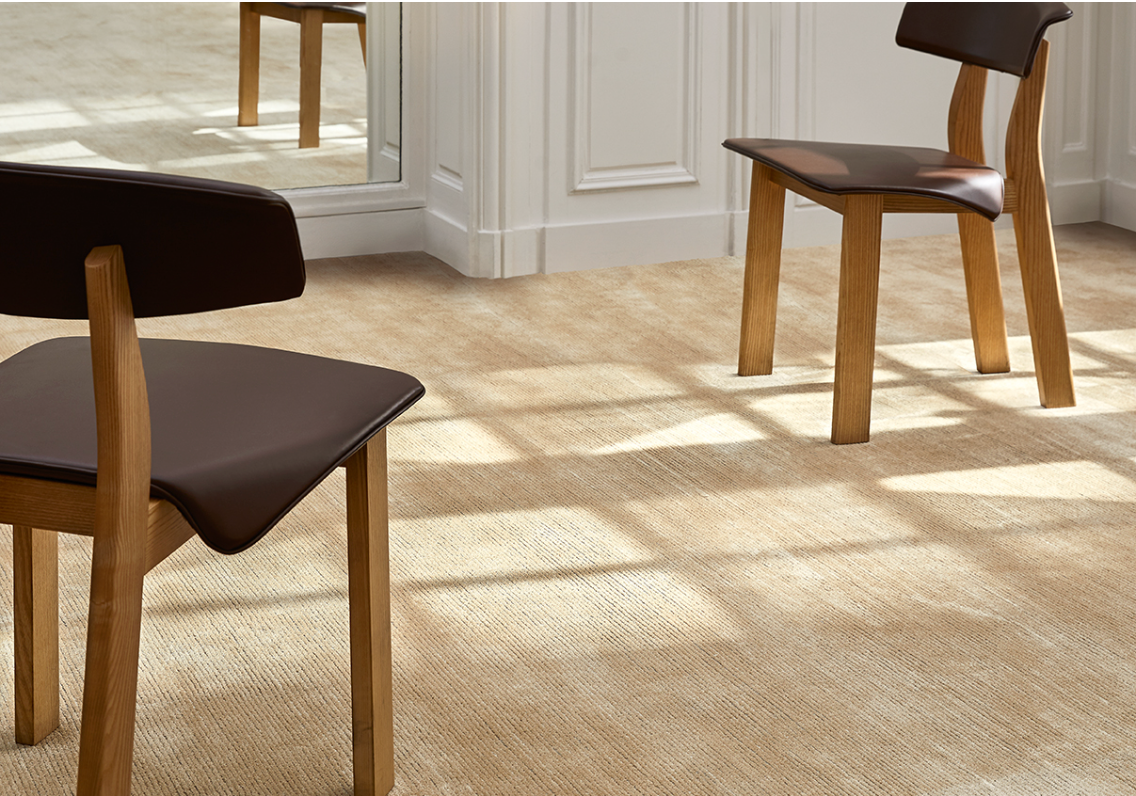
The materials in a mid-century house are already the decoration. Teak, walnut, brick, cork, stone, glass. A patterned rug competes with all of it. A textured solid completes it. This is why the most reliable choice for these rooms is a solid or near-solid rug where the interest comes from the material itself, the ridge of a handwoven weave, the grain of wool cut at slightly varied heights, the low sheen of silk against matt wool. Our Textures and Solids collection is built on exactly this idea.
Where pattern does belong, keep it structural. Geometry that echoes the post-and-beam grid, broad bands, gridded lines, large-scale blocks, works with the architecture. Small busy motifs work against it. If in doubt, hold the pattern to two tones of the same colour and let the weave carry the rest.
Colour for wood, brick and sun
Mid-century palettes are warm. Teak and walnut read orange-brown, brick reads rust, cork reads honey. Rugs in ivory, sand, camel and warm grey sit naturally under this timber. Deeper accents, olive, rust, ochre, tobacco, pick up the period palette without turning the room into a set. Cool blue-greys can work against darker woods but ask for care next to teak, where they can turn the floor cold.
Then there is the sun. These houses were designed to pull light in, and Californian light is strong. Wool holds its colour well and is the sensible base fibre for rooms behind glass walls. Whatever the fibre, a rug in a bright room lives longer when it is rotated now and then, so the light ages it evenly.

Sizing for open plans
Most mid-century living spaces are open plan, the living area, dining area and sometimes the kitchen share one volume under one roofline. Rugs are how these zones are drawn without walls. One generous rug under the seating group, a second under the dining table sized so chairs stay on it when pulled out, and the room organises itself. In feet and inches, that usually means larger than expected, a 9x12 or 10x14 under the sofa group rather than an 8x10, and custom sizes where the furniture plan demands them. We wrote a fuller guide to sizing a rug for a Californian great room, and the same logic applies at smaller scale.
Original houses, imperfect rooms
Real mid-century houses are rarely picture-perfect. Rooms are long and narrow, hearths sit off-centre, sliding walls interrupt where a rug would naturally end. This is where made to measure earns its keep. A rug cut to the actual room, stopping exactly where the stone hearth begins, running the true length of a seating wall, looks intentional in a way no stock size can. Every Rugberry rug is made by hand in custom sizes and colours, and our note on custom rug sizes for American homes explains how the sizing works in practice.
Materials worth considering
New Zealand wool is the workhorse, dense, resilient, colour-fast, right for the main living spaces. Wool with silk brings a quiet sheen that suits evening light through glass. For bedrooms and lower-traffic rooms, the rare fibres, mohair, alpaca and cashmere, offer a softness that matches the intimacy of the period's smaller rooms. All are natural fibres, which is in keeping with a period that never used a synthetic material where an honest one existed.
For Los Angeles homes
We make area rugs for American homes in standard sizes and to measure, delivered from the Dubai workshop with shipping and duties handled in the quote, so the price you approve is the price you pay. Details, timelines and how to start are on our luxury rugs Los Angeles page, or write to info@shoprugberry.com with a photograph of the room and the dimensions, and we will take it from there.