Silk Rugs and Light: How Silk Behaves in a Room
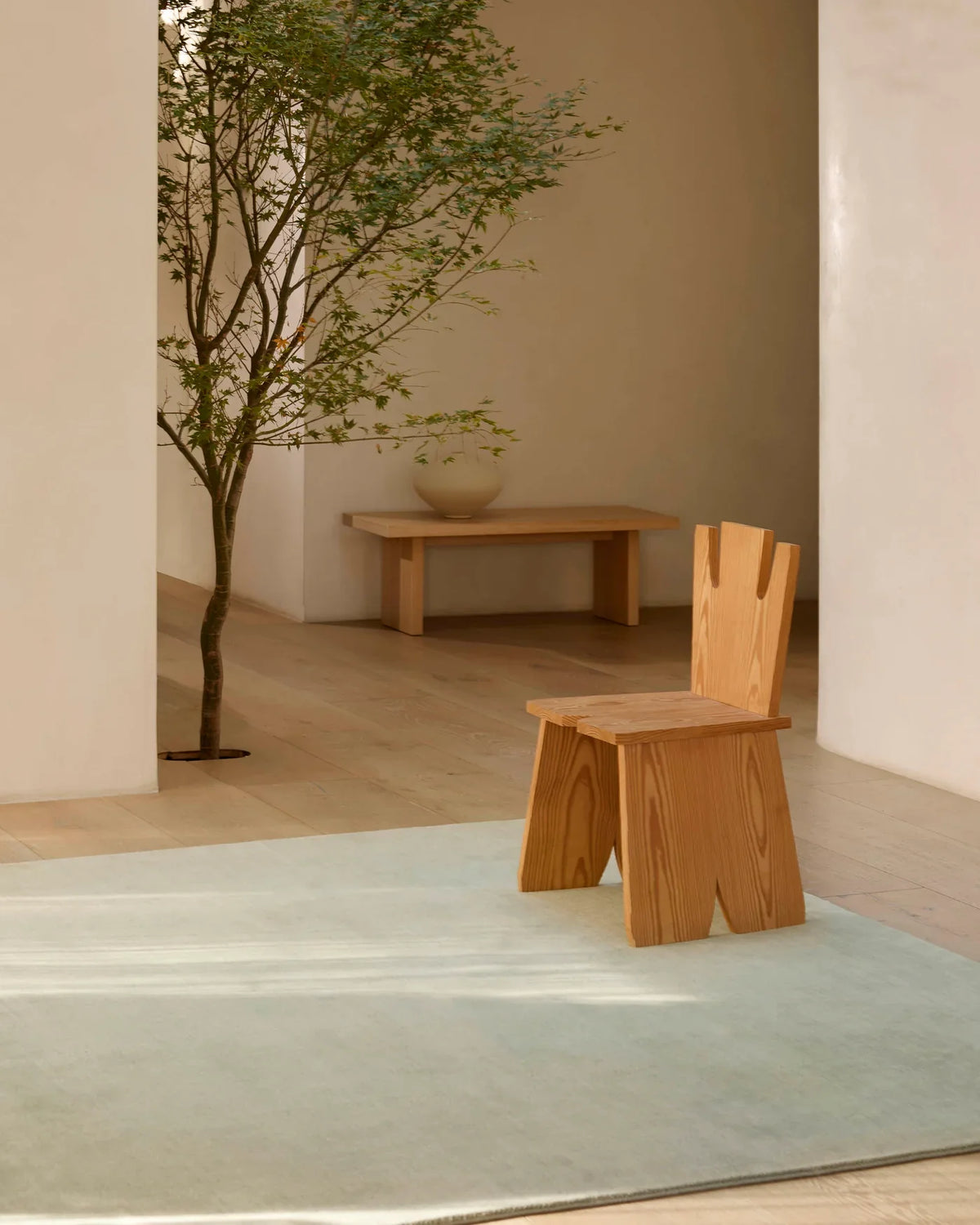
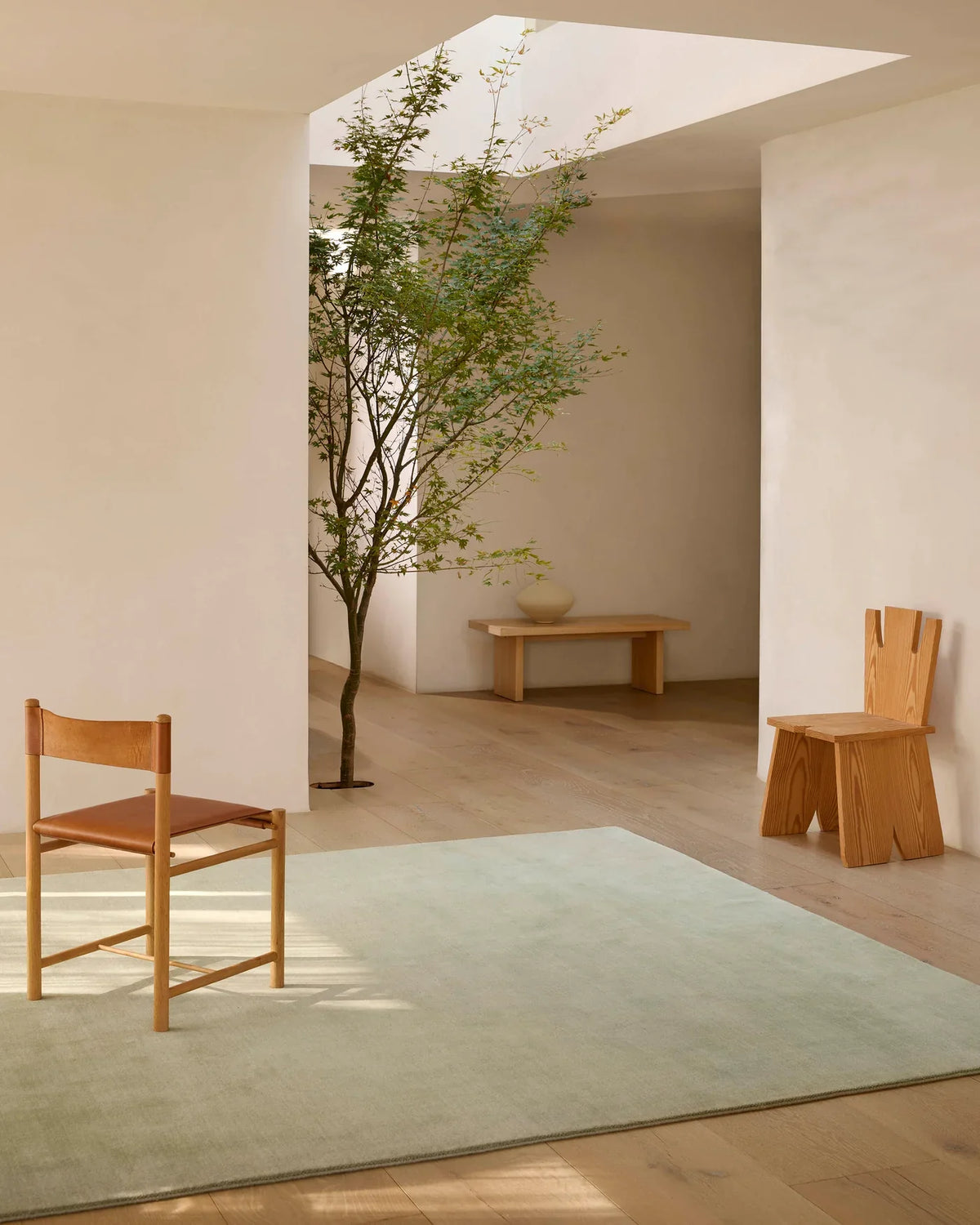
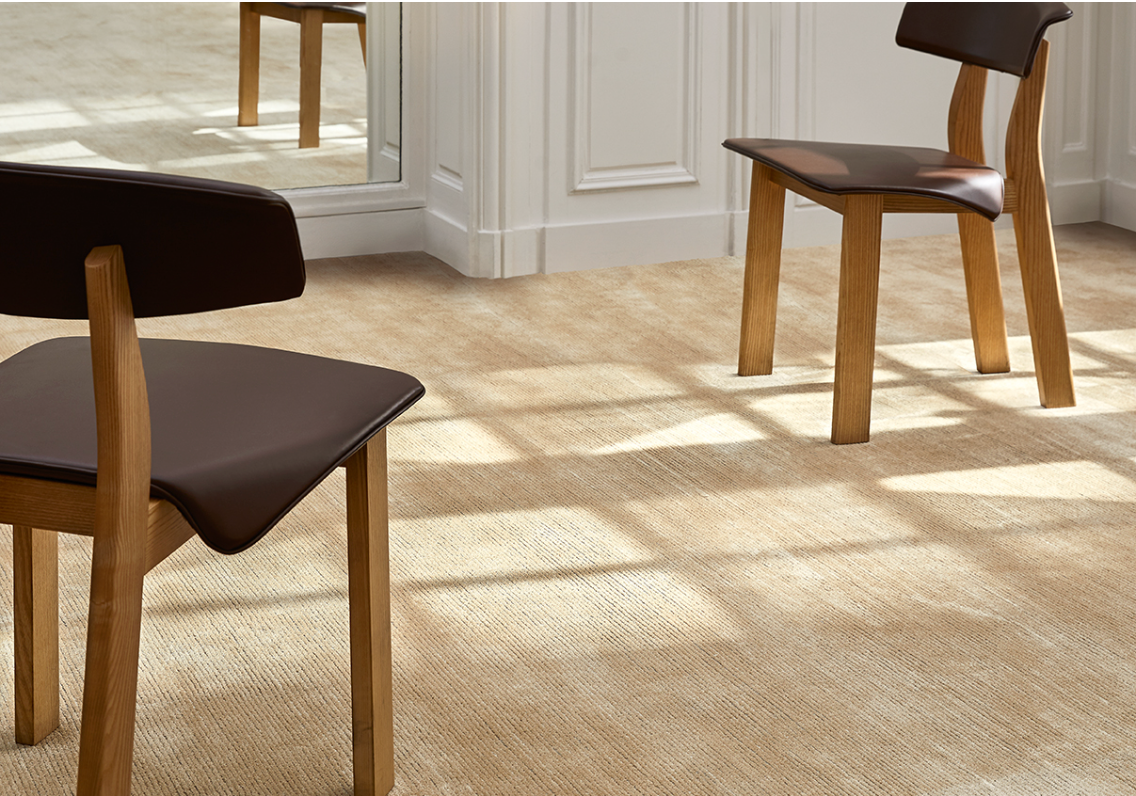
Silk rugs behave differently from every other floor covering, and the difference is light. A wool rug shows you one colour and holds it. A silk rug shows you a range, brightening near a window, deepening as the sun moves, reading almost as two different pieces between morning and evening. In Dubai, where interiors are built around glass and strong sun, that behaviour is worth understanding before you choose one.
Why silk catches light
The reason is the fibre itself. A silk filament has a roughly triangular cross-section, closer to a prism than a cylinder, so light striking the pile is reflected at several angles at once. That is the source of the lustre silk is known for. Wool, with its rounder, scaled fibre, scatters light softly and evenly, which is why it looks matte and consistent. Neither is better. They are simply different instruments, and our material guide to cashmere, wool and silk sets out how each one behaves underfoot as well as under light.
Light side, dark side
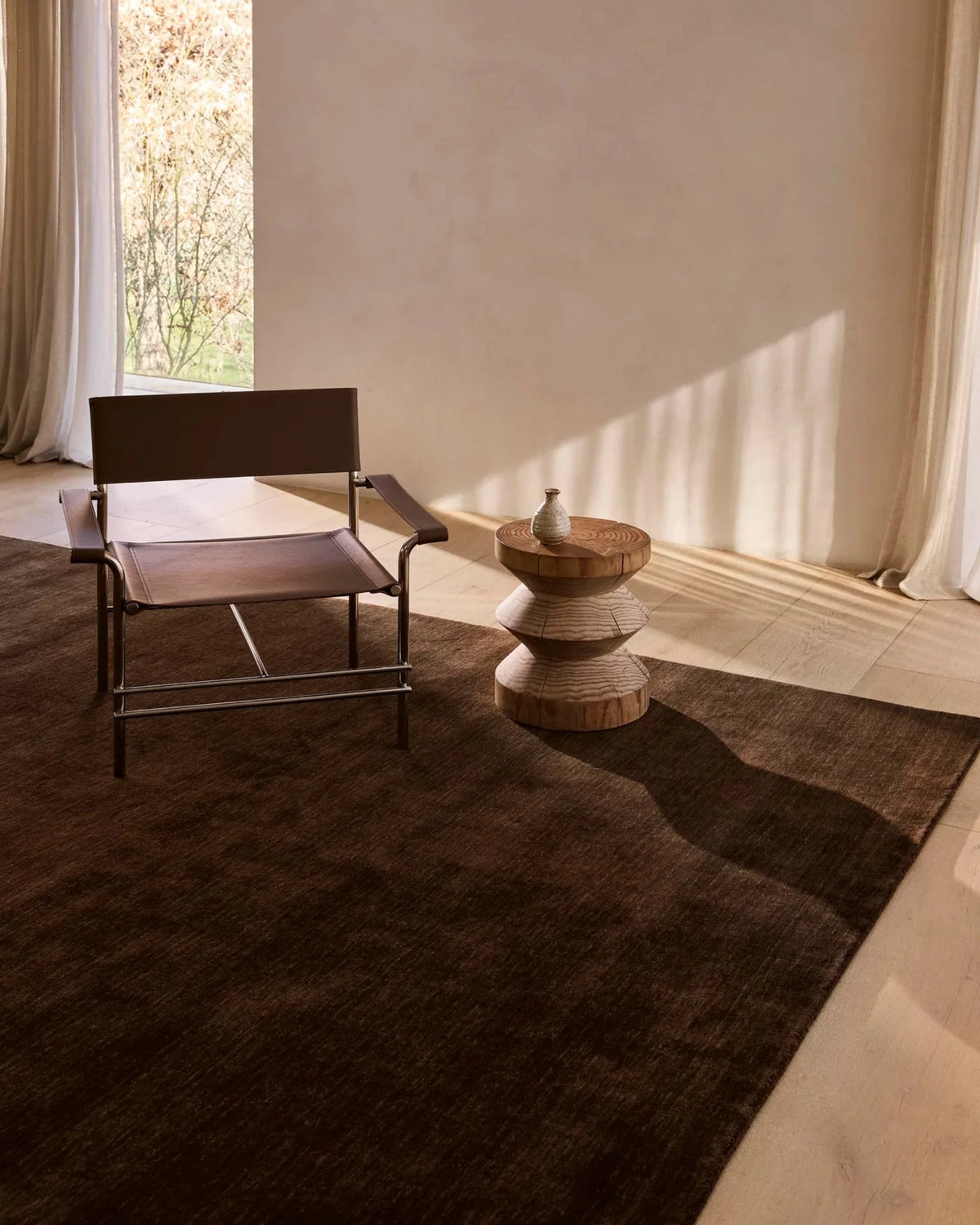
Every silk rug has a pile direction, the way the fibres lean after weaving and finishing. Viewed with the pile leaning towards you, the rug reads darker and richer. Viewed against the pile, it reads paler and brighter. Walk around a silk rug once and you will see both. This is not a flaw and it cannot be removed. It is how the material works, and designers use it deliberately, orienting the rug so the room's main sightline receives the tone they want. When we plan a bespoke piece we ask where you will stand and sit most often, and orient the pile accordingly.

Placing a silk rug in a Gulf interior
Villas and apartments in Dubai and Abu Dhabi tend to have generous glazing, and the light that comes through it is strong for much of the day. A silk rug near floor-to-ceiling glass will be at its most animated there, and sheer curtains do useful work, diffusing direct sun into the kind of soft, directional light that flatters the pile without bleaching it. Prolonged direct sun will fade any natural fibre over the years, so if the rug sits in a bright room, rotate it once or twice a year and let sheers take the harshest hours. Our guide to caring for luxury rugs in the UAE climate covers this in more detail.
Evening is where silk repays the setting most. In a majlis or formal living room lit by lamps rather than sun, the pile picks up every source and returns it as a low sheen. This is why silk has always been the fibre of reception rooms. It performs for guests without asking anything of them.
Colour, and how light moves it
Light does not move every colour equally. Pale silks, ivories, sands and soft greys, show the widest range, shifting from near-white in morning sun to a warm pewter under lamplight. Deep tones such as charcoal and ink move less but gain depth, reading almost liquid in the evening. Mid-tones sit between the two. If you want a rug that changes character through the day, choose pale. If you want quiet constancy with a precious finish, choose deep. The pieces on our silk rugs page show both ends of that range.
Wool and silk together
Many of the pieces we make by hand in Dubai blend the two fibres, with wool carrying the ground and silk picking out the pattern. Under changing light the wool holds steady while the silk details rise and recede, which gives a design movement without altering its structure. Blends are also more forgiving in family rooms, keeping silk's light for the parts of the design that deserve it. Silk sits alongside mohair, alpaca and cashmere in our rare-fibre work, and our note on rare fibre rugs explains how the four compare.
Made to measure, and to the light you have
Because every room's light is different, a silk rug rewards being made for its room rather than bought off the shelf. We weave to your dimensions and your palette, and we advise on pile orientation for the room's main aspect. The process is set out on our custom rugs Dubai page. Each piece is made by hand and delivered across the UAE, the GCC and the USA.