Mohair, Alpaca and Cashmere: Rare Fibre Rugs, Explained
Walk into a fine tailor and the rare fibres are everywhere: mohair in dinner suits, cashmere in overcoats, alpaca in the softest knitwear. Walk across almost any floor and they are nowhere. Weaving these fibres into rugs is slow, expensive and unforgiving, so very few makers do it. This is a guide to what each one actually does underfoot, for the rooms that deserve them.
Mohair, the one that holds light
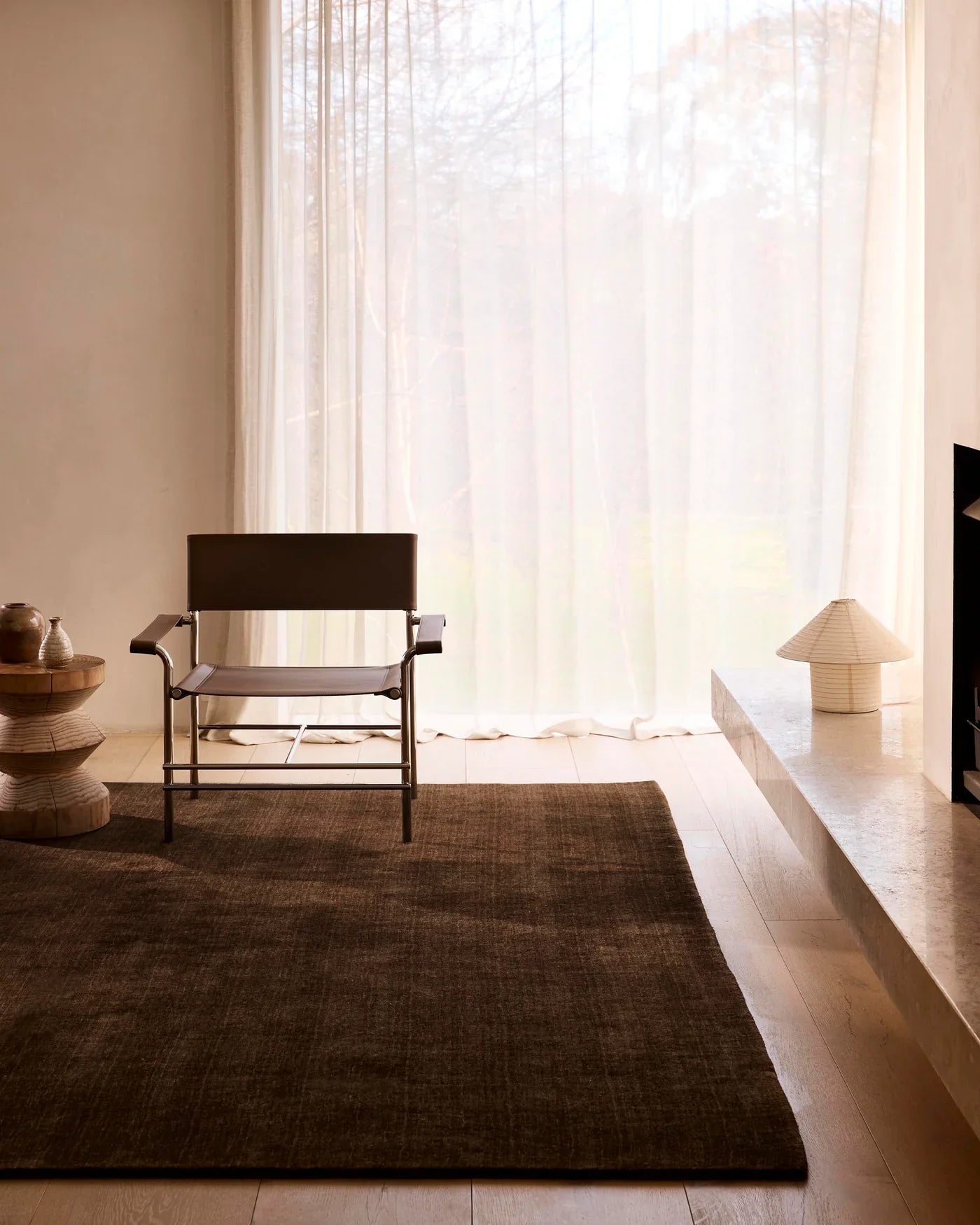
Mohair is the fleece of the Angora goat, and the trade has long called it the diamond fibre: the sheen of silk with far greater strength. In a rug it carries a low, shifting lustre that moves as the day does, so the same piece reads differently at breakfast and at dusk. It takes colour deeply and holds it, which is why mohair tones look lit from within. Our mohair work lives in the Relic and Sillage designs; more on mohair rugs.

Alpaca, the one you cannot stop touching
Alpaca grew its fleece against Andean cold, and the fibre is partly hollow, which is why it warms without weight. It carries almost none of the lanolin sheep's wool must be washed of, so it reaches the loom close to its natural state. An alpaca rug is the one guests cannot name but will not stop touching; it belongs in rooms lived in barefoot. More on alpaca rugs.
Cashmere, the one measured in grams
Cashmere is combed, not shorn, from the undercoat of high-altitude goats, and a single rug can ask for a season's gathering. What that scarcity buys is a softness nothing else reaches and colour that seems to sit below the surface. It is a destination fibre, for bedrooms and reading corners rather than corridors. More on cashmere rugs.
Merino and llama, the quiet ones
Merino is wool refined to its softest register, fine enough to be worn against skin, resilient enough to be walked on; it gives a rug the hand of a favourite sweater. Llama is the rarest of all in rugs, hollow-cored and quietly lustrous, a surface unlike any wool and one very few people have ever felt underfoot.
Why so few makers weave them
The fibres are costly, the supply is small, and they punish careless weaving; a mistake in cashmere is an expensive mistake. Most rug production is built for volume, and rare fibres refuse volume. That is why they remain almost entirely absent from American floors, and why we keep our rare fibre work in Rugberry Reserve: made in small number, to measure, shown on request.
Choosing between them
Light and texture: mohair. Barefoot softness with everyday resilience: alpaca or merino. The absolute peak of softness for a principal bedroom: cashmere. Something almost nobody else will have: llama. For the fuller comparison against wool and silk, our material guide sets it out in detail.
Made to measure, shipped worldwide
Every Reserve piece is made by hand at the Rugberry workshop in Dubai, to your measure, in feet and inches for American clients, and shipped across the United States, the UAE and the GCC. Write to info@shoprugberry.com or call +971 55 303 9091 to view the work or begin a commission.