Hand-Knotted, Hand-Tufted, Handwoven or Handloom: How a Rug Is Actually Made
Almost every rug you will ever be shown is made in one of four ways. The words get used loosely, often interchangeably, and occasionally as marketing. They are not interchangeable. Each technique produces a genuinely different object: different in how long it takes to make, how it wears, how it feels under a bare foot, and what it costs. This is what the four terms mean, without the mystique.
Hand-knotted
The oldest method, and the slowest. A weaver ties individual knots onto a stretched warp, row by row, then beats each row down and cuts the pile. Nothing holds the rug together except the knots themselves and the weave they sit in. There is no glue and no backing cloth.
The consequence is longevity. A hand-knotted rug has no adhesive to fail and no secondary backing to separate, which is why antique rugs are almost always knotted ones. It is also why they take months rather than weeks. Underfoot they read dense and firm rather than soft, and the design shows on the reverse almost as clearly as on the face, which is the quickest way to identify one in a shop.
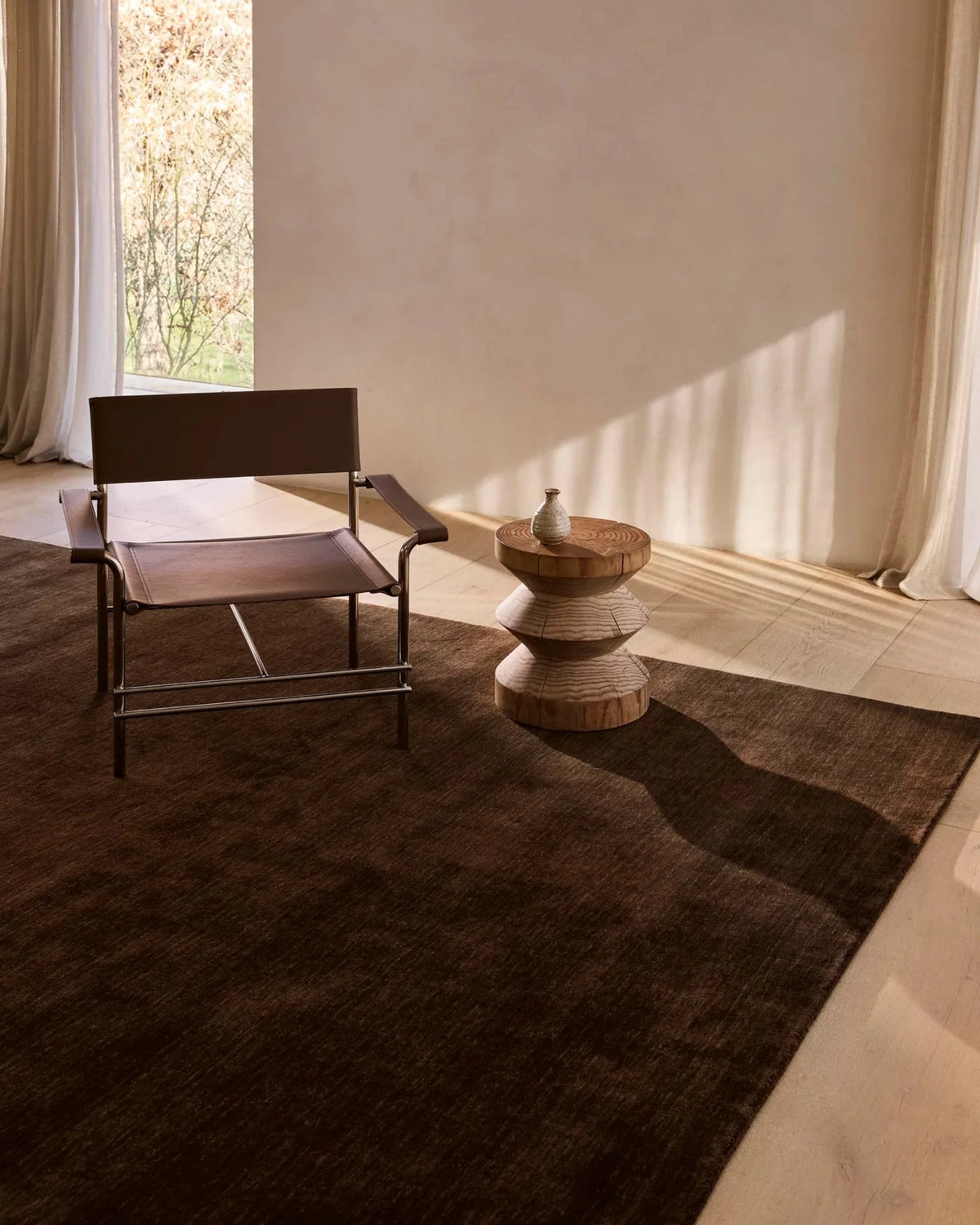
At Rugberry this is how the Hand Knotted collection is built, and how most of the Reserve pieces in alpaca, cashmere, merino and mohair are made.
Hand-tufted
A tufting tool punches yarn through a stretched backing cloth to a drawn design. The loops are then sheared, a coat of latex is applied to lock the tufts, and a second backing is attached. It is hand work, guided entirely by a person, but it is faster than knotting by a wide margin.
What you gain is design freedom and time. Gradients, painterly transitions and complex colour work are far easier to execute in tufting than in knotting, and a large rug can be finished in weeks rather than seasons. What you trade is the adhesive layer, which is a real component with a real lifespan, and a reverse that shows backing cloth rather than pattern.
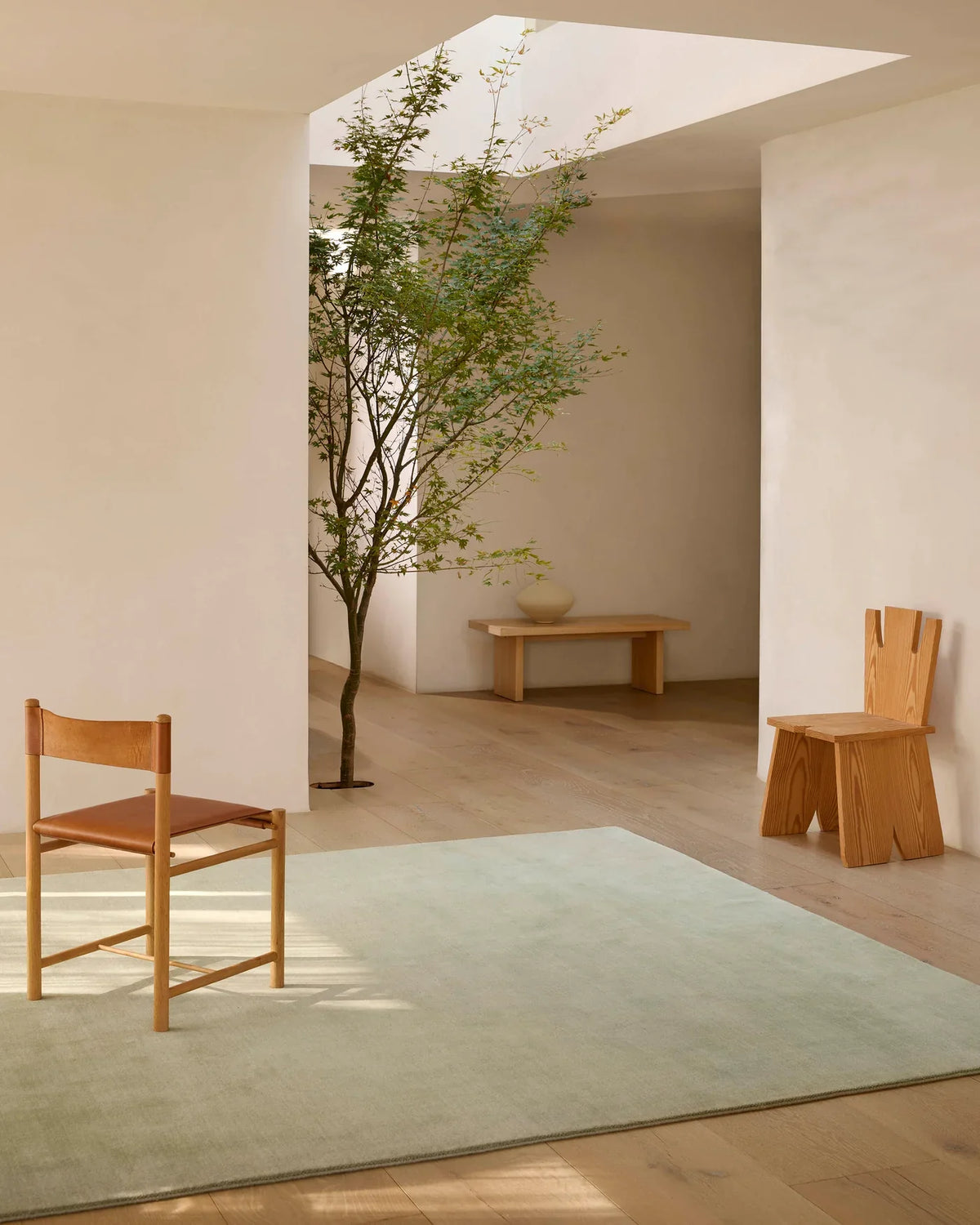
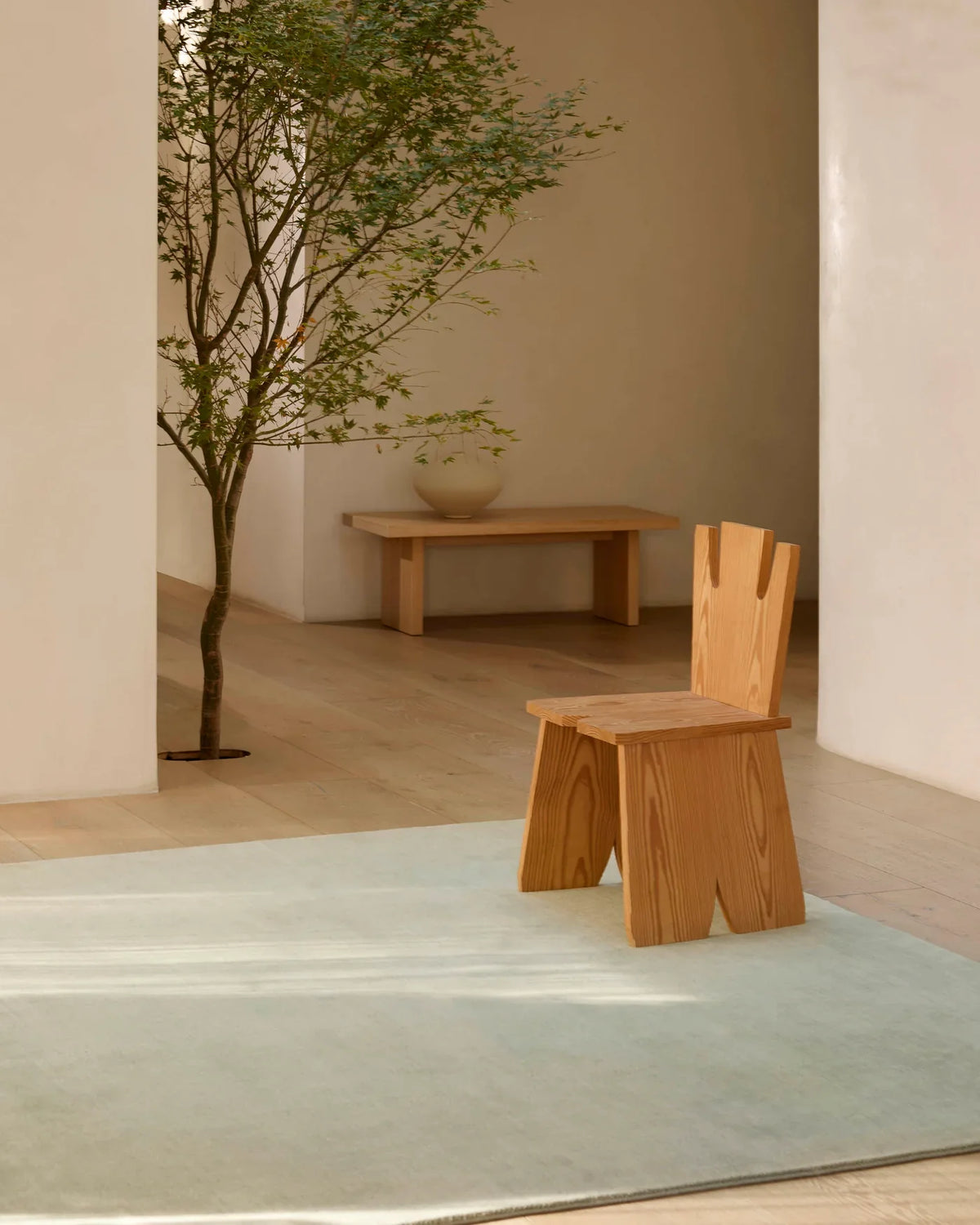
This is the technique behind most of the house, including the Ombré Collection, where one tone gives way to the next without a visible seam. That gradient is possible precisely because of how tufting works.
Handwoven
Here the rug is woven on a loom rather than punched or knotted, with the structure created by the interlacing of warp and weft. Depending on the weave, the result can be flat, low and textural, or lifted into a soft pile.
Handweaving gives a surface with a visible logic to it. You can read the construction with your eyes and with your feet, and the slight irregularity of hand weaving is part of what it looks like rather than a flaw in it.
Most jute rugs are handwoven, for the practical reason that jute is a stiff plant fibre that suits weaving. The Savannah jute rugs are the exception in our catalogue: they are hand-knotted.
Handloom
Handloom is weaving on a hand-operated loom, and it is the term the trade uses when the loom itself does more of the structural work while a person still drives it throughout. It produces a very even, very controlled surface, which is why it suits fibres that are precious enough that consistency matters.
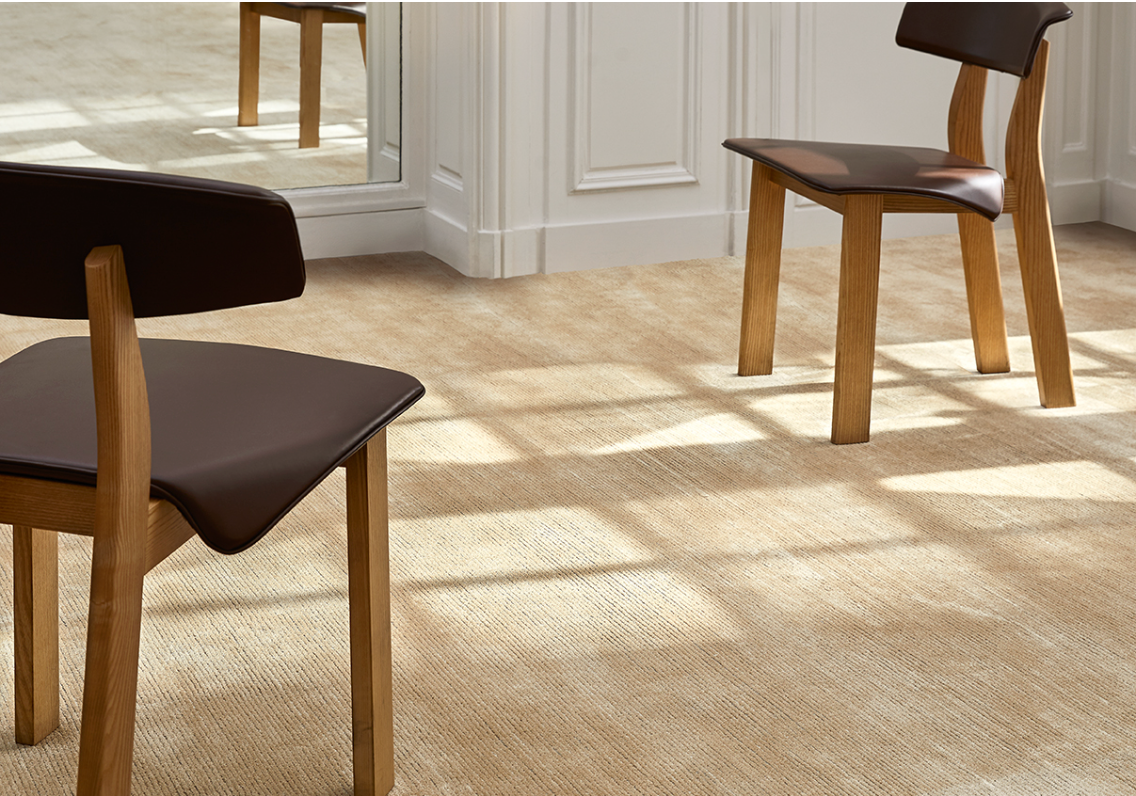
The distinction between handloom and handwoven is one that many sellers blur, and it is worth asking about rather than assuming. In our own catalogue handloom covers a wide range. The Grain Collection sits at the flat, textural end, closer to woven cloth than to a pile rug, while the Plush Collection sits at the deep and soft end. Both are handloom; they simply take the technique in opposite directions. Luma silk, Cashmere Blend, and Silk Patina and Llama Vesper in Rugberry Reserve are made the same way.
Which one should you choose
If the rug needs to outlast the room and possibly you, choose hand-knotted, and accept the wait and the cost. If you want a specific design, a gradient, an artwork translated into wool, or a large piece within a project timeline, hand-tufted is the honest answer and there is no shame in it. If you want texture you can feel and a surface with visible making in it, handwoven. If you want an even, controlled surface in a rare fibre, handloom.
One caution worth naming. Hand-tufted rugs are sometimes sold as hand-knotted, because the words look similar and the price gap is large. The reverse of the rug settles it in two seconds. Turn a corner over. If you can see the design in the weave, it is knotted. If you see a plain cloth backing, it is tufted. Any seller who minds you checking is telling you something.
How to see it for yourself
Every product page on this site states its technique plainly, in the Rug Profile, alongside the fibre and how the rug feels underfoot. We list it because it is the single fact that most changes what you are buying, and it is the one most often left out.
To handle the difference rather than read about it, our team can bring samples to you anywhere in the UAE, or send them across the GCC and the USA. Reach us on +971 55 303 9091, or at our sales office at 1804 Al Ameri Tower, Barsha Heights, Dubai.