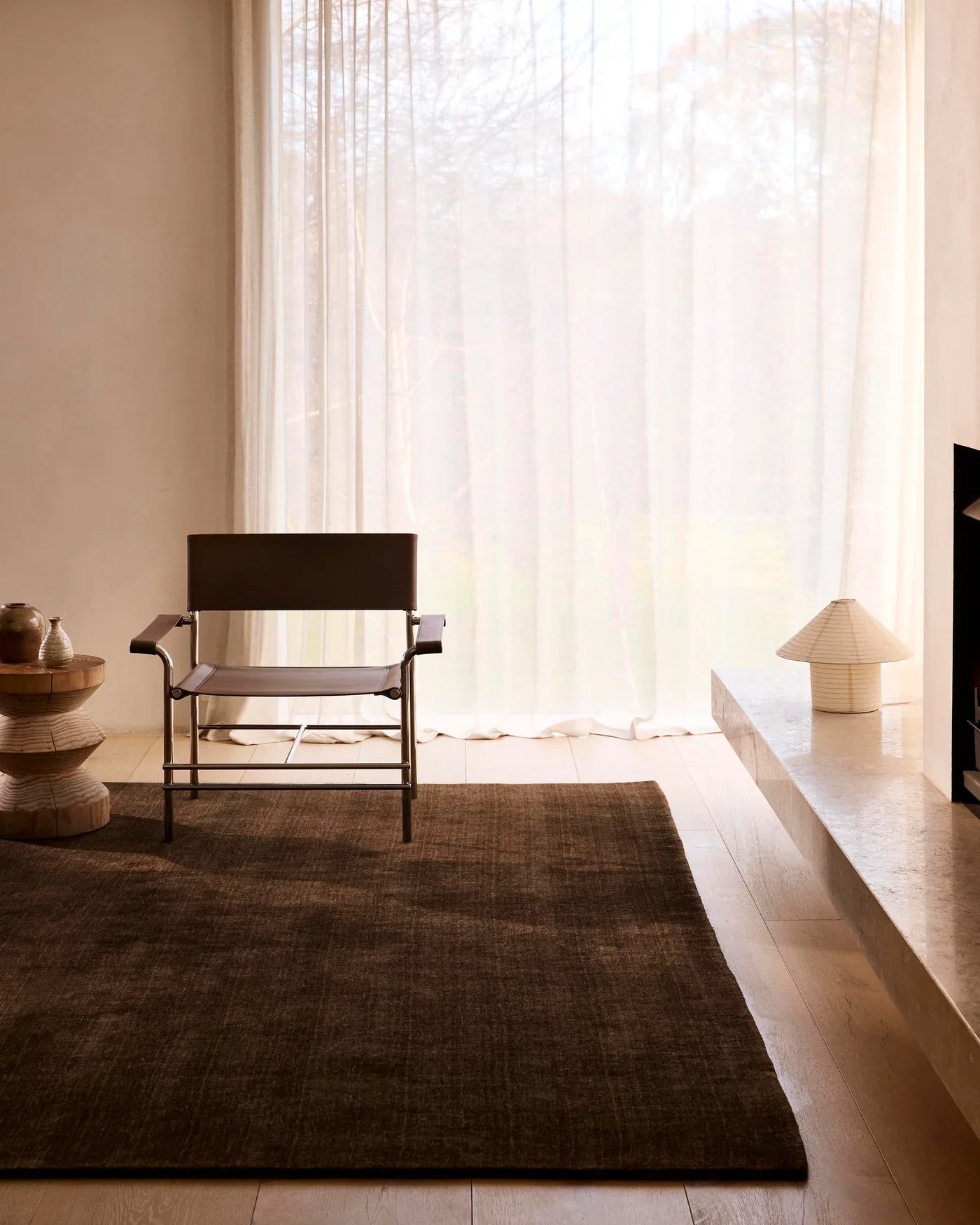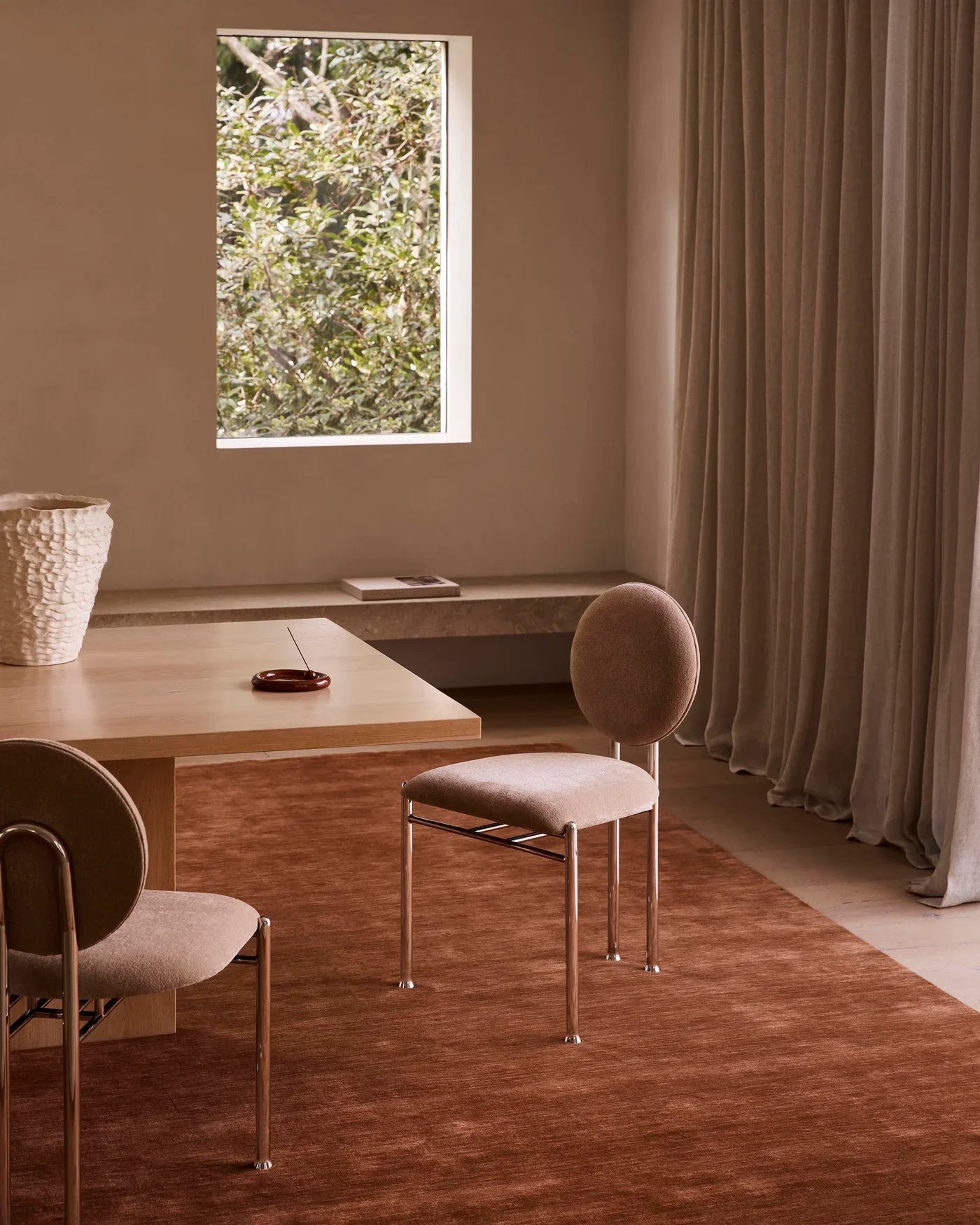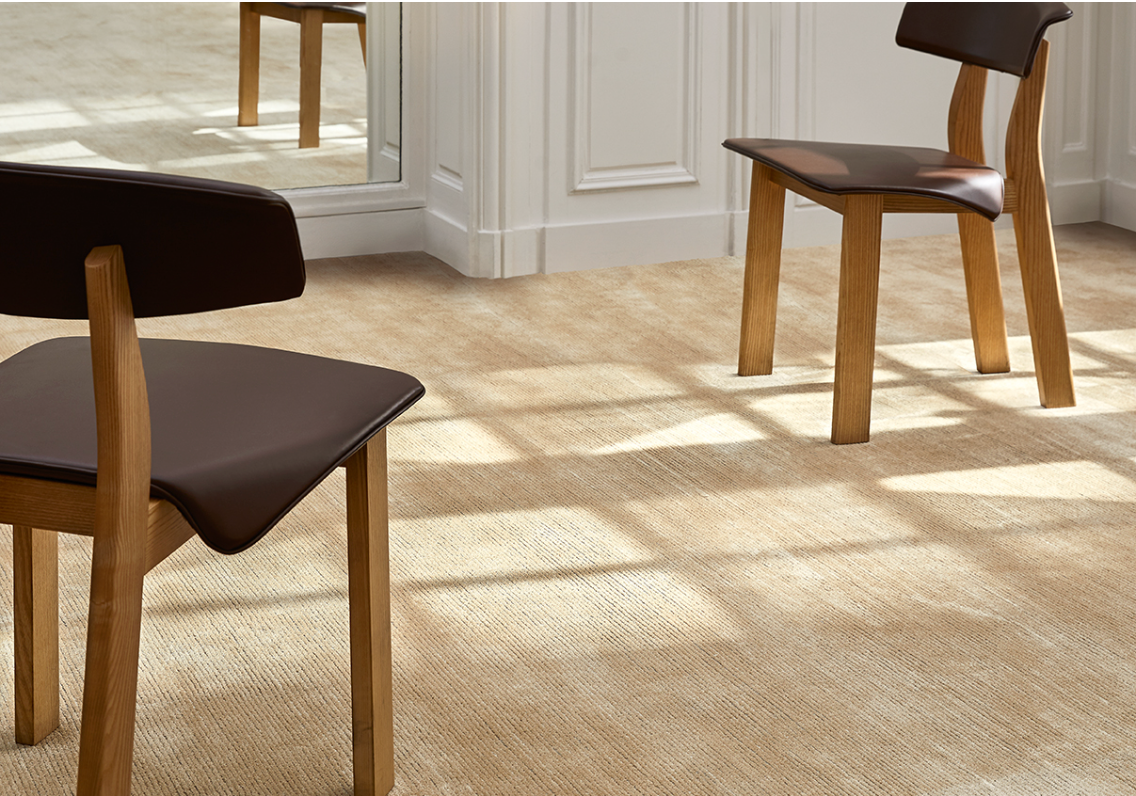
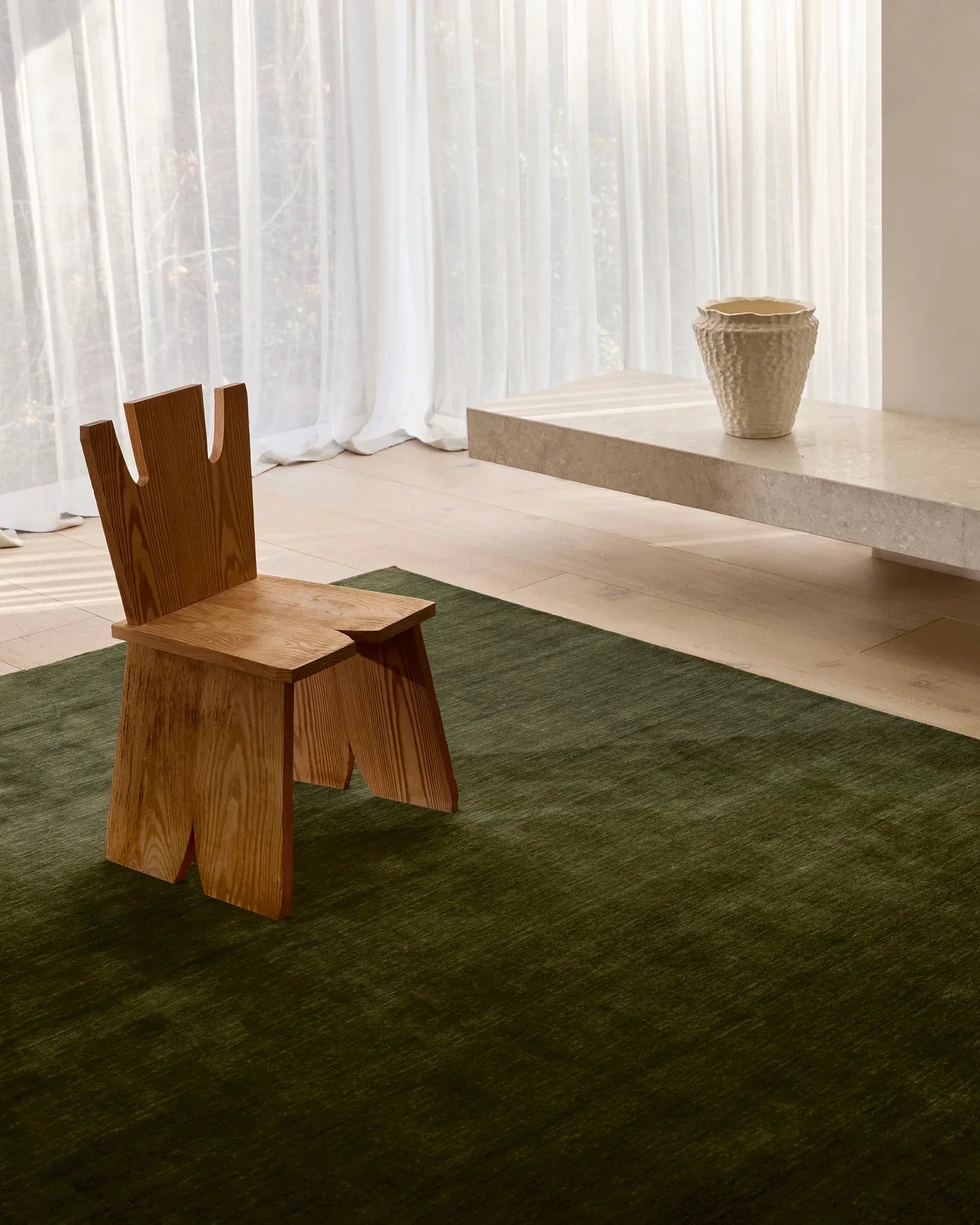
The Bespoke Rug Design Process, from Floor Plan to Floor
People often assume a bespoke rug begins with a drawing. It begins with a room. Before a single colour is chosen, we want to know where the light falls, how the furniture sits, whether the space is walked across or lived in, and what the floor underneath is already saying. Everything after that is craft. Here is what actually happens between a first conversation and a rug arriving.
One. The brief
Most projects start with a floor plan, though photographs and a tape measure will do. We look at the dimensions, the furniture layout, and the room's use, then agree the size. This is the stage that decides whether the finished piece will look inevitable or approximate, and it is worth taking slowly. Designers usually arrive with elevations and a palette; private clients often arrive with a single photograph, which is enough to begin.
Two. The design
You can start from a design already in the house and adapt it, or begin from nothing. Either way the piece is drawn to your dimensions rather than scaled from a standard size, which matters more than it sounds: a pattern stretched to fit reads as stretched. Shape is open at this stage too, so rounds, runners and forms drawn around furniture cost only drawing time.

Three. Colour and material
Colours are matched against what the room already holds: a fabric swatch, a paint reference, a stone sample, the sofa. Material is chosen for how the room is used rather than for how it sounds. New Zealand wool for rooms that work hard, wool and silk where light should move across the floor, jute where the room wants honesty underfoot, and the rare fibres of Rugberry Reserve for rooms that are lived in barefoot.
Four. The strike-off
Before anything is woven at full size, we make a sample of the actual weave in the actual colours. Screens lie and printed references lie; a physical piece of pile in your own light does not. This is where a tone gets adjusted by a shade or a pile height gets rethought, and it is the single most useful stage in the whole process.
Five. Weaving
The rug is then made by hand, tufted or knotted depending on the design, by artisans who have spent years at it. Hand-knotted work is the slowest and the most permanent, tied row by row. Timelines vary with technique and size, and we give you a date rather than a range.
Six. Finishing and delivery
Once woven, the rug is carved where the design calls for it, washed, bound and edged, then checked against the original brief before it leaves. Delivery runs across the UAE, the GCC and the USA, and we advise on underlay and placement when it arrives.
The faster route
Not every project has months. Selected designs are held as rolls in Dubai through the Quick Custom Program, cut and finished to your exact dimensions in about a week. It is the same craft with the drawing stage already done.
Begin with your floor plan
Every Rugberry piece is made to measure in Dubai. Bring your plan to our sales office at 1804 Al Ameri Tower, Barsha Heights, Monday to Saturday, 10am to 5pm, or write to info@shoprugberry.com or call +971 55 303 9091. Interior designers and architects can work with us through the Rugberry Trade Program.