Cashmere, Wool or Silk: How to Choose a Rug Material
Most rug decisions are made on pattern, and most rug regrets are made on material. Colour can be lived with. A fibre that is wrong for the room announces itself every day: a pile that flattens in a corridor, a silk that fades beside a west-facing window, a softness bought for a room nobody walks through barefoot. Here is how the three principal materials actually behave.
Wool: the one that works
Wool is the default for good reason. The fibre is naturally crimped, which is why the pile springs back after a chair, a foot or a decade. It resists soiling, takes colour generously, tempers a room's temperature rather than trapping heat, and it is forgiving of the mistakes everyone eventually makes with a glass of something red.
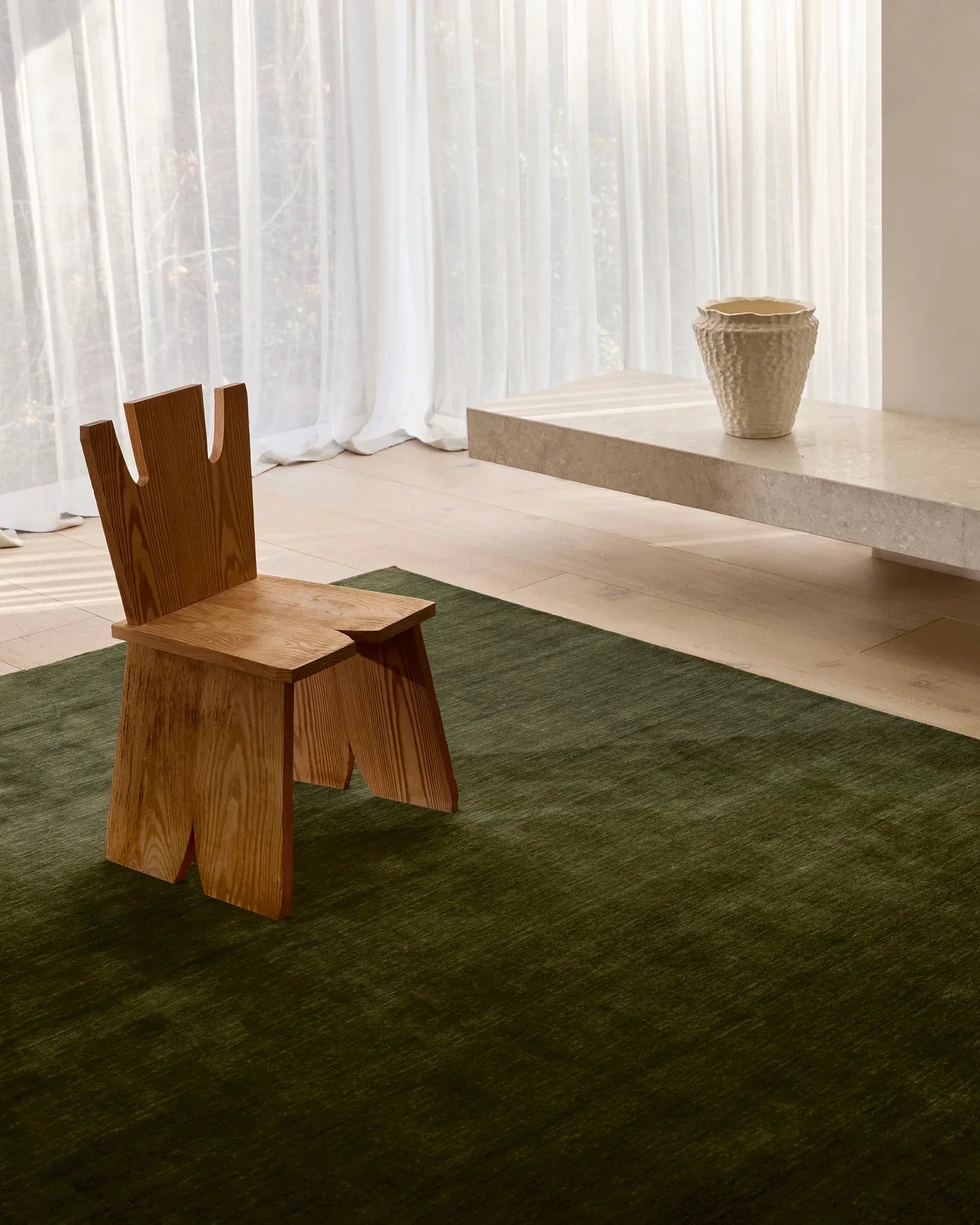
New Zealand wool, which the house builds most of its work on, is long-stapled and clean-toned, so it holds pale colours without going grey on you. Within wool there is still a range: coarse wool for hard-working rooms, and merino at the fine end, soft enough to be worn against skin. If a room is used daily, wool is almost always the right answer. See the full range in Fine Wool Rugs.

Silk: the one that changes with the light
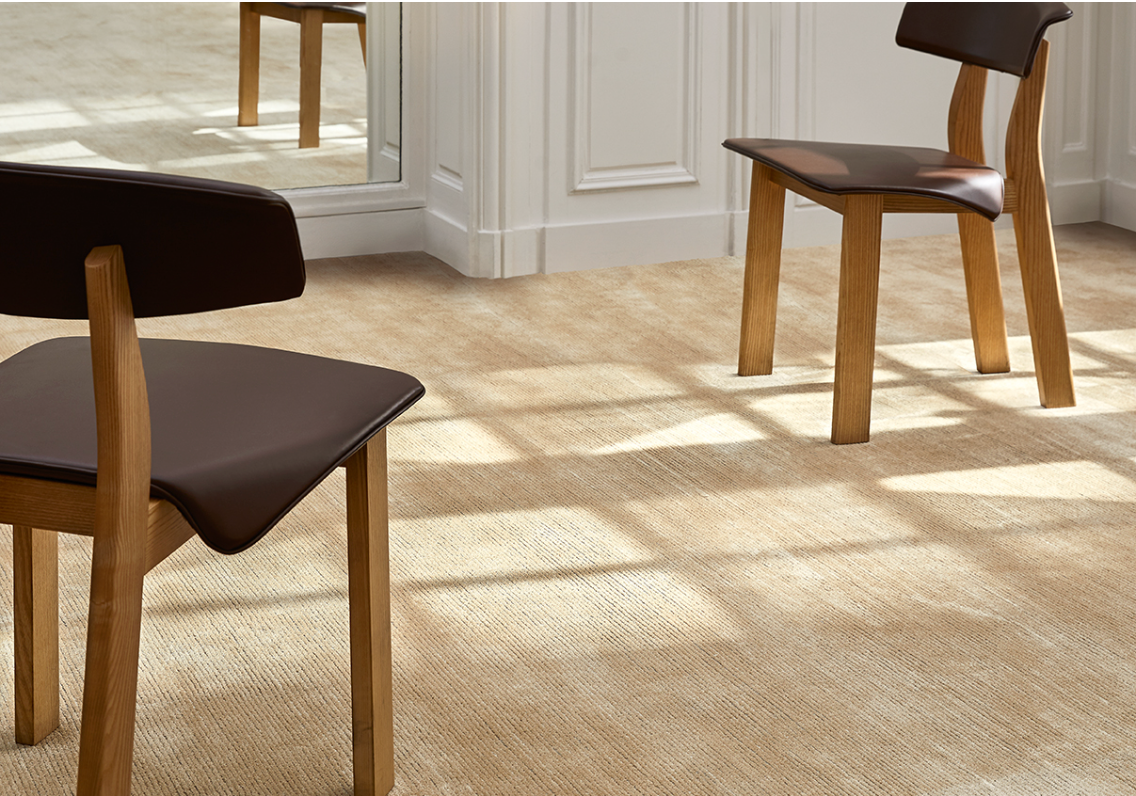
Silk is a continuous filament rather than a crimped staple, and that single fact explains everything it does. It reflects light instead of scattering it, so the surface shifts as you cross the room and the same tone reads twice in one afternoon. It also takes dye deeper than wool, which is why silk colours look lit from inside.
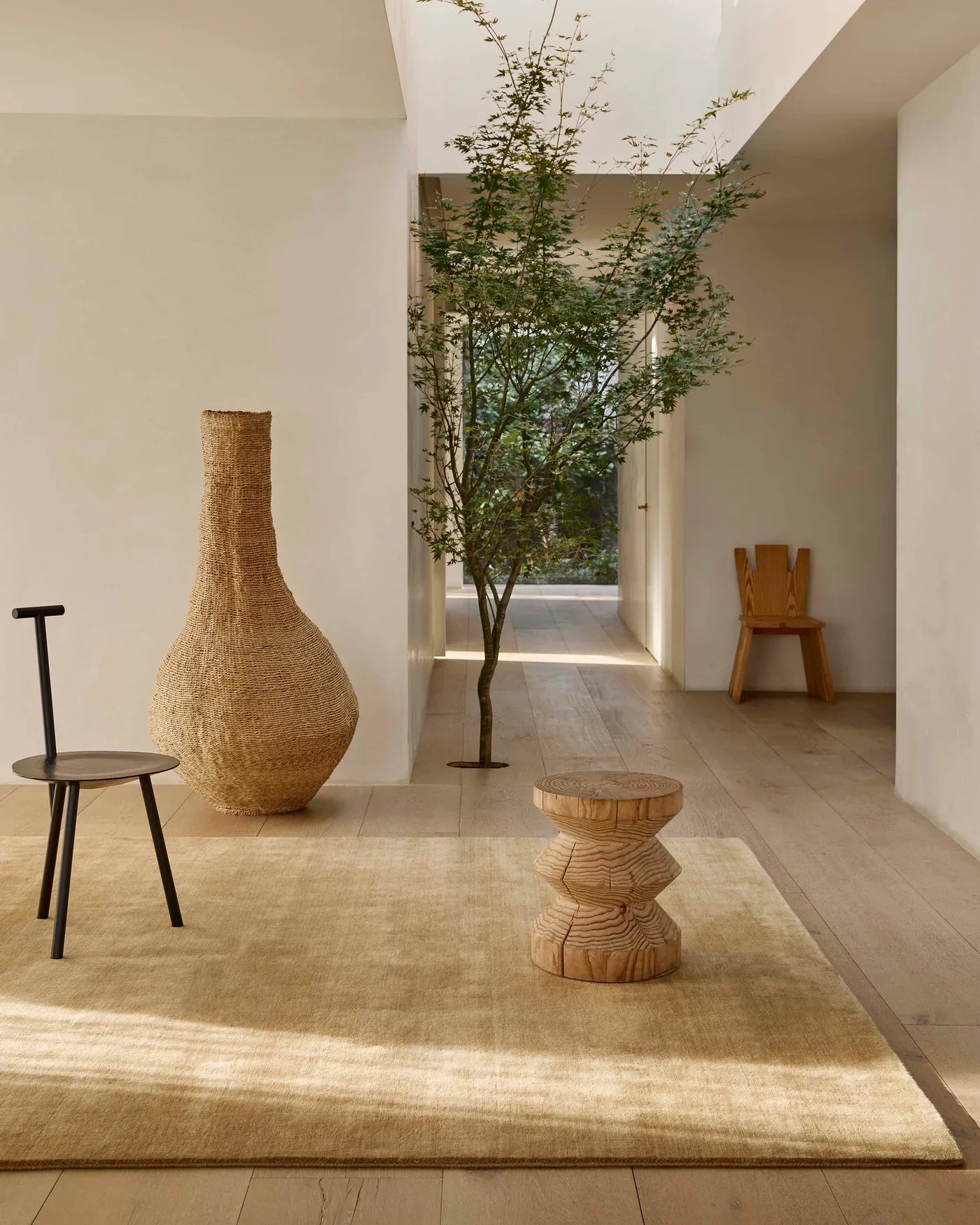
What it does not do is take punishment. Silk shows footprints, dislikes standing sun, and asks for specialist cleaning. That makes it a fibre for formal rooms, principal bedrooms and any space where the light is part of the architecture. Where a room needs the effect without the fragility, a wool and silk weave carries most of the light with far more resilience, which is why so much of the house is woven that way. More in silk rugs at Rugberry.
Cashmere: the one you feel before you see
Cashmere is combed from the undercoat of goats bred for high-altitude winters, gathered in grams rather than kilos, and a single rug can ask for a season's yield. What that buys is a softness no wool reaches and a depth of colour that seems to sit below the surface rather than on it.
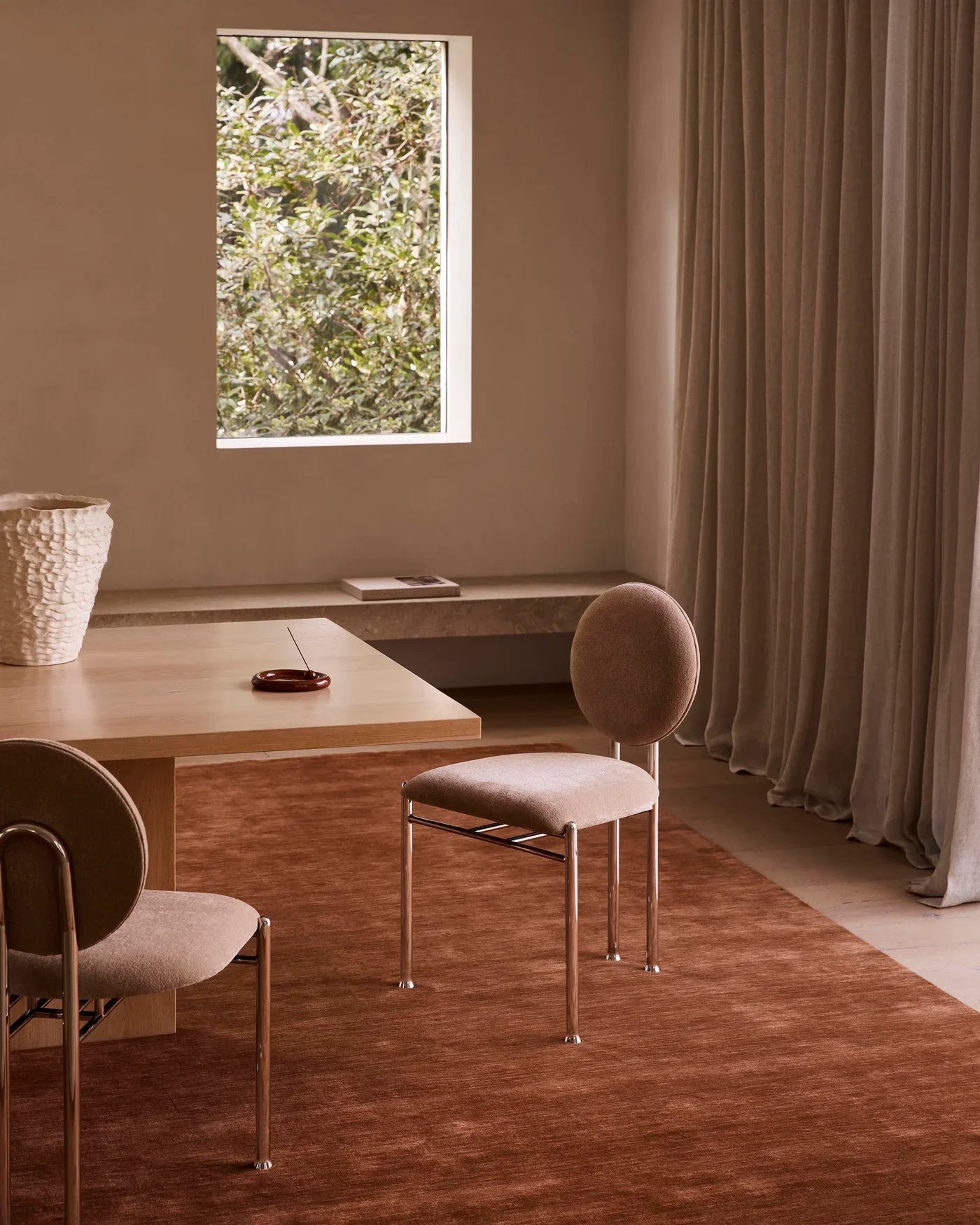
It is not a fibre for traffic. Cashmere belongs where feet arrive bare and stay a while: bedrooms first, then the reading corner and the quiet side of a living room. Rugberry works it two ways, blended with fine wool for rooms that are genuinely lived in, and pure in Rugberry Reserve. More in cashmere rugs at Rugberry.
Choosing by room
Majlis and living rooms: wool, or wool and silk if the room is formal. Dining rooms: low, dense wool, because chairs move and dinners happen. Principal bedrooms: cashmere, alpaca or deep plush wool. Formal sitting rooms: silk or wool and silk. Corridors, stairs and entrances: wool, always, and jute where a room opens onto a garden or terrace.
What each one costs, and why
Price follows scarcity and labour rather than appearance. Wool sits at the accessible end because the fibre is plentiful and forgiving to weave. Silk costs more because it is slower and less tolerant on the loom. Cashmere costs most because of how little of it exists: the rarity is the product. A hand-knotted construction adds again, in any fibre, because it is the slowest way to make a rug and the most permanent.
Care is part of the choice
Every fibre here is natural and every one rewards the same small habits: rotate twice a year, vacuum gently without a beater bar, use underlay, and clean professionally about once a year. Silk and cashmere simply have less patience for shortcuts. Our full guide to caring for rugs in the UAE climate covers the detail.
Feel it before you decide
Material is the one decision no photograph can make for you. Every Rugberry piece is made to measure in Dubai, and we will put wool, silk and cashmere in your hands before a single colour is confirmed. Visit our sales office at 1804 Al Ameri Tower, Barsha Heights, Monday to Saturday, 10am to 5pm, write to info@shoprugberry.com, or call +971 55 303 9091.